 |
| Cleo de Merode (1875 -1966), French dancer of the corps de ballet of the Paris Opera, in attire, 1893, Photography anonyme, Paris, Bibliothèque Marguerite Durand |
J'étais tout simplement passé à côté ! Une exposition importante et merveilleusement documentée sur l'histoire du féminisme, débutant au 19 ème siècle mais prenant sa source au siècle des lumières. Les revendications du mouvement cherchant à promouvoir les droits des femmes et leurs intérêts dans la société civile. Il s'agit avant tout d'abolir les inégalités sociales, politiques, juridiques, économiques et culturelles. Beaucoup de chemin parcourut depuis ces premières batailles engagées, droit de vote, IVG, égalité des salaires (??), But many struggle to lead in this new century has seen some rights violated, the aberrant control of births in many countries and especially forced marriages, female circumcision and rape with impunity. This exhibition presents many unpublished documents, including photographs that reflect the changes in our society.
| |
| From 1860 to 2010, 150 years of women's history told through 200 photographs of the fund unknown photo library Marguerite Durand. |
 |
| Olympe de Gouge s , feminist XVIII e century guillotine! |
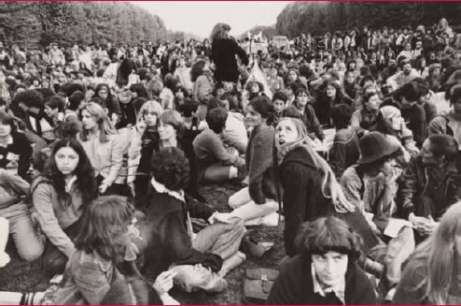 |
| dedicated women of the Commune to the years MLF The great "battles" of women from the 1970s to 1990s (mainly through the pictures of Catherine and Janine Niepce Deudon), but the Communards (including Louise Michel) Resistant , pacifist, suffragist, women politicians ... |
------------------------------------------ -------------------------------------------------

The photographs from a collection of unique, one of the library Marguerite Durand, take us on a journey dotted hundred and fifty years of women's history, the 1860s to the MLF. Portraits, photographs of art and documentary reveals some of the great adventures of the collective lives of women, women's work, the arts and their mobilization for their release. Images in this course highlights the dual perspective of the collection since its inception : To make visible the women in the public space, working in fields traditionally reserved for men and archiving the testimonies of their struggles, still unfinished. Return these multiple perspectives to a writing prompt from the past that attaches to women's empowerment so essential, decisive in the quest for equality and freedom for all.
Occupation photographer side women
Photography is central to the exhibition, which showcases the work of women photographers famous: Germaine Krull, Laure Albin Guillot, Berenice Abbott, Gisele Freund, Yvonne Chevailier, Edith Gerin, Sabine Weiss, Janine Niepce or Irina Ionesco.
The photographs from a collection of unique, one of the library Marguerite Durand, take us on a journey dotted hundred and fifty years of women's history, the 1860s to the MLF. Portraits, photographs of art and documentary reveals some of the great adventures of the collective lives of women, women's work, the arts and their mobilization for their release. Images in this course highlights the dual perspective of the collection since its inception : To make visible the women in the public space, working in fields traditionally reserved for men and archiving the testimonies of their struggles, still unfinished. Return these multiple perspectives to a writing prompt from the past that attaches to women's empowerment so essential, decisive in the quest for equality and freedom for all.
Occupation photographer side women
Photography is central to the exhibition, which showcases the work of women photographers famous: Germaine Krull, Laure Albin Guillot, Berenice Abbott, Gisele Freund, Yvonne Chevailier, Edith Gerin, Sabine Weiss, Janine Niepce or Irina Ionesco.
 |
| Man in the fog in Paris, 1950, Photography by Sabine Weiss (b. 1924) |
 |
| Nu back. 1929. Photo of Yvonne Chevalier (1899-1982) |
 |
| Hubertine Auclert (1848-1914), French feminist. France circa 1900. Photography by G. Charles. |
 |
| Merchant of four seasons. Paris. Photography Germaine Krull (1897-1985). |
 |
| Winter Fashion 1937-1938. 1937. Photography by Laure Albin-Guillot (1879-1962) |
 |
| Colette ( 1873-1954), Phtographie Janine Niepce (1921-2007). Marguerite Durand Library. |
Since the pioneering demonstrating for women's rights July 5, 1914, to activists Neither whores nor submissive, March 6, 2004. A total of 150 years of women's history traced mainly portraits, but wide shots of demonstrations and strikes, comic-books accounts. Marguerite Durand (1864-1936) with her friends from the Belle Epoque of feminism creates the Fronde in 1897, the first made entirely by everyday women. It will leave the City of Paris documentation resources especially for women and a library in his name. Since 1932 residing in the town hall of the 5th arrondissement, place du Pantheon, the institution moved into the 13th Street National in 1989.
Curators: Florence Rochefort , historian and Annie Metz, chief curator of the library Marguerite Durand. Submitted
in the Month of Photography in Paris and 40 years of MLF.
in the Month of Photography in Paris and 40 years of MLF.
In partnership with the magazine and the site Causette AUFEMININ.COM Tuesday to Sunday from 13h to 19h
Nocturne Thursdays until 21h
Admission 6 euros / half-price 3 Euro / reduced € 4
Nocturne Thursdays until 21h
Admission 6 euros / half-price 3 Euro / reduced € 4
Some sites to visit:
http://www.egalite-infos.fr/2010/ 12/07/150-ans-de-feminisme-en-images /
http://www.google.fr/imgresimgurl=http://blog.plafonddeverre.fr/public/suffragettes/.suffragettes_4_m.jphttp:/ / blog.plafonddeverre.fr/post/2008/09/27/nous-sommes-toutes-de-suffragettes
http://yfa.awid.org/fr/wp-content/uploads/2011/01/feministes_partout-
---------------------- -------------------------------------------------- -------------------------------------------------- -
Coming from Iran, a photographer and visual artist malicious feminist! : Shadi Ghadirian
She ask veiled women with vacuum cleaners or cans of Pepsi: photographer Shadi Ghadirian is famous worldwide for his humorous portraits of Iranian housewives. We publish here excerpts from two of his series, "Like everyday" ("Like every day") and "Ghajar".
Being a photographer in Iran requires finesse. No way to address the problems of Iranian society by ignoring the multitude of prohibitions enacted by the mullahs since the Islamic revolution of 1979. Any reference, however slight it, sexuality is considered a crime under common law. A woman can be photographed without the veil compulsory when it appears in a public space .
 | |
|
Dans cette série « Ghajar », elle s’en prend spécifiquement à sa société iranienne régie par les lois islamiques datant du VIIe siècle. En s’inspirant des portraits photographiques qui se réalisaient au XIXe siècle en Iran sous l’époque Ghajar, Shadi Ghadirian fait poser ses femmes voilés avec un objet contemporain : poste de radio, aspirateur, cannette de Pepsi Cola... The artist thus reveals the contradictions that remain in knead a society of great complexity. And at the heart of why women decided not to take oneself too as Shadi Ghadirain occupy more space.
 |
| © Shadi Ghadirian |
 | |
|
 | |||||||
------------------------------------------------- -------------------------------------------------- ----- a fascinating artist 
I fled to Japan, because I was dead. I fled to France to escape the grief. One day when I was three, my mother had put me at the door. I left the house carrying a box with all my treasures. I took refuge in a public garden. The police found me there the next day. Since then I've always felt nomad, vagabond, fugitive. When I arrived in France I had to learn the language as a child was born. With the new meanings that I have won by changing the culture, with the freedom that allow me the language and structures of French thought, I realize now pictures of "married bachelors "where is defeated, but in reverse, the haunting horror of the girl who discovered the ancient bondage of arranged marriage and the fate of Japanese women humiliated. How can we forget the secret of my mother when I was eight years and that made me so much horror? Then I discovered my parents had seen for the first time the wedding day had been arranged entirely by their respective families. Today, in a succession of figures probably conjuring, I embody a paradoxical married, unmarried and intangible, identity simultaneously dramatic, fictional, subtle, parodic and contradictory. In a kind of excess of what was my experience as a fashion designer in Tokyo, I create all sorts of self-portraits almost monochrome to stage the wedding the bride's virtual single, widowed in turn, cosmonaut, Chinese, manga, Egyptian, etc.. (1). --------------------------------- -------------------------------------------------- --------------------------------- show at the Museum of Modern Art, a contemporary Turkish artist and feminist Inci Evin  En résidence à la Villa Raffet dans le cadre de SAM Art Projects depuis août 2010, Inci Eviner est une artiste turque qui vit et travaille à Istanbul. Artiste majeure de la scène turque contemporaine, représentée par la galerie Nev, elle a participé à de nombreuses biennales, dont celles de Shangai (2008), de Pusan, (Corée du sud, en 2010) et a exposé à la Whitechapel de Londres, au Guggenheim de Berlinn au Bonniers Konsthall De Stockholm. Elle a présenté en 2009 au MAC/VAL à Vitry-sur-Seine le projet New Citizen , et l’installation Harem à Lille, as part of Istanbul crossing. His work is deeply embodied, centered on the body, it is based on the drawing, mostly ink on paper. These highly gestural and figurative drawings constitute the indispensable basis of all its new projects. She also produces large format on canvas. In recent years, work Inci Evin have also been made with a video overlay technique it was appropriate to mix existing patterns and creating in the studio. His subjects are engaged with society contemporary and not without a political dimension: the status of women, citizens of the world ... ----------------------- -------------------------------------------------- ------------------------------------------ Marguerite Durand (1864-1936) and Belle Epoque feminism
|
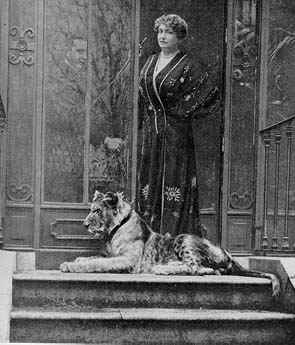

activist for women's rights during the Belle Epoque, Marguerite Durand, the first patron of press in France, is the founder of the newspaper La Fronde, fully prepared and administered by women. To demonstrate their role in history, she created a fund documentation especially for women. This collection contains 4000 photographs today, enriched mainly portraits of actresses, artists, painters, musicians, writers and activists that have marked the history of women's rights. Including photos displayed: Sarah Bernhardt, Camille Claudel, Colette, Yvette Guilbert but Helene Cixous.
-------------------------------------------- -------------------------------------------------- ------------------------
Simone de Beauvoir (1908-1986)

author of " The Second Sex "in the moment of its publication had no audience in France, but after it is published in the United States and will become a classic of feminism. The author's premise: " One is not born a woman, one becomes " emphasizes that not only there is no predetermined feminine nature that would justify sex segregation, but also raises the idea that womanhood and existence as a woman is a struggle. That book is an analysis of how sociological, psychological and economic hierarchy between the sexes. Beauvoir invites women to use their freedom to leave the role of servant and mother.
few quotations from Simone de Beauvoir in the book " The Second Sex":
«Ce ne sont pas les individus qui sont responsables de l'échec du mariage : c'est l'institution elle-même qui est originellement pervertie.»
«Le mystère de l’incarnation se répète en chaque femme ; tout enfant qui naît est un Dieu qui se fait homme.»
«C'est par le travail que la femme a en grande partie franchi la dist ance qui la séparait du mâle ; c'est le travail qui peut seul lui garantir a freedom concrete. "
«Ce ne sont pas les individus qui sont responsables de l'échec du mariage : c'est l'institution elle-même qui est originellement pervertie.»
«Le mystère de l’incarnation se répète en chaque femme ; tout enfant qui naît est un Dieu qui se fait homme.»
«C'est par le travail que la femme a en grande partie franchi la dist ance qui la séparait du mâle ; c'est le travail qui peut seul lui garantir a freedom concrete. "
--------------------------------------- -------------------------------------------------- ------------------------------
an illustration of a Catholic website that advocates:
"De cons femininity feminism"!
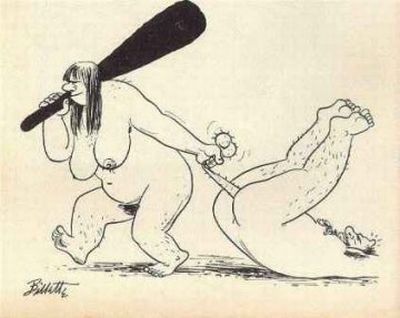 |
| is turning to Mary, praying and contemplating the virtues that women find their way back to the beauty and dignity of their mission. |


0 comments:
Post a Comment